Affichage des articles dont le libellé est what is amber. Afficher tous les articles

vendredi 22 février 2013

What is Amber

I am very pleased that Cattie Coyle invited me to write an article in her blog on Baltic Amber.

Check it out! 

Baltic Amber pendant with a mosquito

dimanche 14 octobre 2012

How Is Amber Produced?


Several factors affect the production of amber from resin, a process known as amberization. Once the resin is exuded it hardens. Resin contains liquids such as oils, acids and alcohols, including the aromatic compounds that produce the distinctive resinous smell – two examples of highly aromatic resins are frankincense and myrrh. Scientists call these liquids volatiles and they dissipate and evaporate from the resin. The resin then undergoes a process known as polymerization, whereby the organic molecules join to form much larger ones called polymers. Hardened resin is known as copal. Copal becomes incorporated into soil and sediments where it remains long after the tree dies. It continues to polymerize and lose volatiles until the resultant amber is completely polymerized, has no volatiles and is inert.

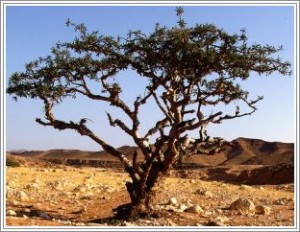
Frankincense tree


Many scientists thought that time was important in the fossilization of resin to produce amber, and the amberization process was estimated as taking between 2 and 10 million years. However, it now appears that many more factors are involved. Most amber in deposits around the world was not formed where it is found – the copal or amber has been eroded from the soil, transported by rivers and deposited elsewhere. For instance, amber from Borneo is 12 million years old and comes from sand and clay sediments that were deposited in a deep ocean. The fossilized resin from Borneo that comes from beds of sandstone is completely inert and undoubtedly amber. However, resin that comes from beds of clay still contains volatile components, which means that it is still copal. So, the type of sediment in which the resin is deposited is much more important than time for amber formation. But what is not so clear is the effect of water and sediment chemistry on the resin.

Resin oozing from under the bark of a cedar tree, where a branch has been sawn off


From Amber: The Natural Time Capsule
By Andrew Ross

dimanche 1 avril 2012

What is Amber?


Amber is one of a few gemstones of organic, rather than mineral, origin. Essentially, amber is a fossilized resin from prehistoric evergreens or other now-extinct species of resin-producing trees which flourished in large forests 40-60 million years ago.

As the resin flowed downward, it occasionally entrapped insects and plant species, and eventually accumulated in masses of various sizes and shapes that later became buried in the soil below the trees. Extreme conditions, such as pressure by glacier covering, severe climatic changes and submersion of the resin under salt water, took place over million of years, causing the process of oxidization. The volatile compounds which imparted “stickiness” to the resin escaped so slowly the resin was prevented from cracking into numerous minute fragments as a result of the shrinkage. During the lengthy time underground, molecules were forced to polymerize; that is, to rearrange themselves. This caused a metamorphosis from a tacky resin to a solid, forming a compound with greater stability and hardness than the original substance, and similar in appearance to plastic (in no way is amber identical – chemically or otherwise – to plastic, though plastic often masquerades as amber to the unsuspecting public).

Rough or “block” amber is commonly found in irregular lumps or rounded nodules, also in grains, drops and stalactitic masses. Pieces are generally small weighing up about 200 grams, although considerably larger masses have been found.


Amber is commonly yellow to honey-colored, but its hues range from white to light yellow (butterscotch) to reddish brown and green. Sometimes it is so pale that seems colorless. Approximately 250 different color varieties are known. In addition to variations of color, amber can be absolutely transparent or completely opaque. 


When chips of amber are burnt, a smoke with pleasant resinous odour of pine is emitted, and for this reason amber was burnt as incense in temples in the Far East. If a lump of amber is rubbed vigorously, it produces enough negative static electrical charge to pick up small particles of tissue paper. The word electricity was actually derived from electron, the Greek name for amber. Unlike other minerals gemstones, amber is warm to the touch, since it is a poor conductor of heat.

Amber is water-insoluble tree resin which has attained a stable state after various changes due to loss of volatile constituents, processes such as oxidization and polymerization, and lengthy burial in the ground. The botanist is not concerned with the length of time to reach this state. It may take a year, thousands years, million years or more. The geologist considers amber to be a fossil tree resin, “fossil” meaning evidence of prehistoric life. The resin, then, must have been excluded from the tree at least before recorded history. The purist places even more restrictions up on the term amber. For him “true amber” is the fossil resin containing as much as 3% to 8% succinic acid (hence known as succinite) and coming from trees which flourished along shores of the Baltic Sea as long ago as 60 million years.

Gem-dealers and jewellers obviously are purists, since one pays the highest price for Baltic Amber. The geologist works to establish the age of the deposits in which the amber is found. The geologist works to establish the age of the deposits in which the amber is found. He also attempts to characterize the amber by its physical and chemical properties, and leans heavily upon aid from organic chemists to accomplish this. The botanist, naturally, is interested chiefly in the botanical sources of amber.


Patty C. Rice, Ph.D.

mercredi 7 septembre 2011

Properties of Amber


Amber is the hardened and fossilized resin of certain pine trees such as the Pinus succinifera.
Amber is either collected from sea shores or fished off the waters, or it is mined byopen - pit mining. Yellowish-brown or honey color is the best known color for amber which are fished or mined along the coasts of Baltic Sea, these are popularly known as Baltic amber. Natural ambers are very old from hundreds to millions of years. Inclusions like frog, butterflies, lizards, spiders, ants, mosquitoes and other insect species inside amber decides its worth.
Copal resin (kauri gum) has similar appearance (simulant) that of an amber stone which is generally confused with real amber and mistakenly used in jewelry asamber beads.
Separation of real amber from plastic (imitation) amber.
S.G.
Amber1.08floats
Salt Water1.12liquid
Plastic1.20sinks
Take a glass of water and add 2 spoon of salt in it. Now dip amber and plastic inside this saturated salt solution. According to Archimedes Principle, which states that, if the S.G. of the stone is greater than that of the liquid it will sink and if the S.G. of the stone is less than that of the liquid it will float. Therefore, amber starts to float on saturated salt solution while plastic sinks. This test is only for separation of amber from plastic and confirms that amber floats in saturated salt solution. Real amber having inclusions of insects may react differently to this test.


Properties
Chemical Composition: 
C10H16O + H2S (approx.) as mixture of hydrocarbons, plus resins, succinic acid and oils
Classification / Type: 
Types of Amber:
  1. Sea Amber: found in the sea or washed up on the shore.
  2. Pit Amber: dug up form pits.
Colors / Varieties: 
Yellow, brown, red (sourced from Myanmar), orange. Color depends on source and impurities. Transparency: Transparent to opaque. Transparency depends on gas bubbles.
Crystal System / Forms: 
None. Amorphous.
Hardness: 
2 - 2.5
Specific Gravity: 
1.05 - 1.09 (usually 1.08)
Cleavage / Fracture: 
None / Conchoidal.
Optic Character: 
Usually an aggregate (A.G.G.) or strong A.D.R. reaction. But, may show any reaction.
Lustre: 
Resinous or greasy.
Refractive Index / Birefringence: 
±1.54 / Nil.
Pleochroism: 
None
Dispersion: 
None
Magnification: 
Amber is noted for its inclusions which are chiefly insects and leaves, gas bubbles, flow lines, other natural inclusions such as pyrite, calcite, etc.
U.V. Fluorescence: 
Bluish white in shortwave and yellow in longwave.
Spectrum: 
Not diagnostic.
Treatment (Enhancement): 
  • Coating: darker colored materials are coated over the surface.
  • Colorless and colored impregnation: to improve the clarity using rape seed oil. Color staining is done to get aged amber and also other colors.
  • Heating: darkens the color in some varieties of amber, clarifies cloudy varieties with plenty of gas bubbles by heating in oil and causes stress cracks to form which is know as sun spangled amber.
Specific Tests & Remarks: 
  • Amber floats in a saturated salt solution.
  • Amber, pressed amber and copal resin break away in powdery splinters or chips with a knife and exhibit static electricity when rubbed.
  • Amber, when burnt emits an aromatic odour.
  • Amber does not soften with ether.
  • Amber softens at about 150°C and melts at 250°C - 300°C.
  • Amber often darkens with age to a fine red brown color.
Synthesis: 
Not commercially synthesized.
Simulants (with key separation tests): 
  • Pressed amber (amberoid): May show elongated gas bubbles and flow lines, outlines of varying clarity of each of the pieces pressed may be seen. Under longwave ultra violet lamp it may show blue white fluorescence. It is not affected by ether or acetone.
  • Copal resin: A drop of ether or acetone will soften and form a stick path. Under shortwave ultra violet lamp it exhibits strong white fluorescence.
  • Plastic (bakelite, celluloid, etc.): Higher S.G. than amber. Peels with a knife and floats in a saturated salt solution.
  • Glass: R.I. & S.G.
  • Chalcedony: S.G. Structure
Geological Occurrence: 
In sedimentary deposits and on shore lines.
Sources: 
  • Along the coasts of the Baltic Sea, where 90% of gem quality amber is fished or mined.
  • Other sources include Sicily, Romania, Dominican Republic, Mexico, Hawaii, Myanmar (red amber with higher S.G.), etc.
Cuts & Uses: 
Mostly as cabochons, beads, carvings, etc.

Please visit our 100% genuine Baltic amber jewelry web store at www.amberregina.com


Source: http://www.gemstonebuzz.com/amber